Understanding Non-Alcoholic Fatty Liver Disease (NAFLD) in Type 2 Diabetes
A Health Guide to Cyclic Yoga
The human liver performs over 500 vital functions and, its physical mass makes it the largest internal organ weighing approximately 1.5 kilograms in a healthy adult. The liver is situated in the upper right quadrant of the abdominal cavity.
What is Non-Alcoholic Fatty Liver Disease (NAFLD)
The clinical term: Metabolic Associated Dysfunction Steatotic Liver Disease (MASLD) is the new term for what was previously known as Non-Alcoholic Fatty Liver Disease (NAFLD).
NAFLD is the accumulation of fat in the liver cells that exceeds 5%.
Steatohepatitis
This means the excess fat accumulation around the liver is now worsening. Steatohepatitis causes an immune response that can damage the liver and how it functions.
The clinical classification: Metabolic Associated Steatohepatitis (MASH)
Commonly known term: Non-Alcoholic Steatohepatitis (NASH).
What is the connection NAFLD in Type 2 Diabetes?
NAFLD affects between 70-75% of individuals with Type 2 Diabetes.
How is NAFLD linked to Metabolic syndrome?
According to NHS website
-
“Metabolic syndrome is the name for a group of health problems that put you at risk of type 2 diabetes or conditions that affect your heart or blood vessels.”
-
Metabolic Syndrome is “a complex interplay of genetic predisposition, biological sex, ethnicity, age, and lifestyle factors.”
-
Health factors linked to metabolic syndrome: poor weight management, obesity, eating a diet high in unsaturated fats, drink a lot of alcohol, lack of exercise, smoking.
The risk of getting metabolic syndrome increases as you get older. It is important to follow a healthy lifestyle.
*Statistics for some women according to online research in the UK:
Estimated Statistics NAFLD in Type 2 Diabetes
Reproductive Age (Under 50 Years)
Prevalence Rate: Approximately 10% to 15% of women in this age bracket
The Menopausal Transition and Middle Age (50 to 69 Years)
Prevalence Rate: Approximately 25% to 35% of women in this age bracket.
Elderly Population (70 Years and Older)
Prevalence Rate: Approximately 20% to 30%.
*The percentages estimates for “Hormonal Context” are not included.
UK Afro-Caribbean Women
Research carried out suggests that “UK Afro-Caribbean women exhibit a paradoxically lower prevalence of NAFLD/MASLD compared to White British and South Asian women, with an estimated prevalence of 12% to 18% depending on age and metabolic risk profiles”
Monga, Varun, and Satheesh Nair. Ethnic and Racial Disparities in Chronic Liver Disease. 1st ed., Springer, 2018
Riazi, K., et al (Academic Journal). PMC10029957
Why BMI Screening is important in
Type 2 Diabetes?
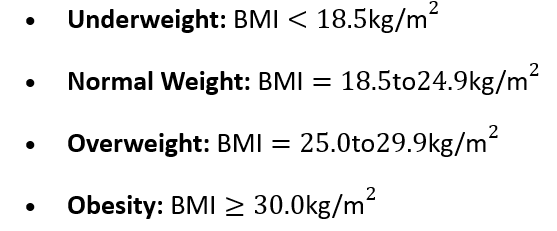
BMI (Body Mass Index) is a measure used to evaluate body weight relative to your height.
Body mass index is used to find out if you are underweight, normal or healthy weight, overweight, or have obesity according to your age. (Ref: NIH)
However, there are cases when this might not be accurate. For example, the method used for screening BMI might not accurately distinguish the difference between “fat mass” and “lean muscle” tissue. It is important that your healthcare provider explains the difference between fat mass and lean muscle in your case.
The World Health Organisation (WHO) and the National Institute of Health (NIH) use the following classifications:
IMPORTANT SIGNS and SYMPTOMS – see your Healthcare Provider
Pain or dull ache in right side of the body, upper right quadrant of abdomen
Unexplained weight loss
Feeling generally unwell
Tiredness
Severe itching of skin
Jaundice
Skin is easily bruised and bleeds
Swelling: abdominal, legs and ankles
Sleep disturbance, confusion
What is Cyclic Yoga in NAFLD?
Clinical trials for NAFLD confirm that Cyclic Yoga help reduce liver fat even in the absence of dramatic weight loss.
Read about the trial here: Effects of cyclic yoga on selected metabolic and hepatic parameters in diabetic women with fatty liver diseases: A clinical trial Effects of cyclic yoga on selected metabolic and hepatic parameters in diabetic women with fatty liver diseases: A clinical trial - ScienceDirect
The Theory behind the trial
Sustained stress (chronic) plays a massive role in worsening NAFLD.
We are triggered by stress in different ways, for example lack of adequate rest or sleep, poor diet, mental health concerns and other factors.
When your stress levels rise, the hormone cortisol levels are triggered in response to the rise in your stress.
“With too much fat entering the liver and insulin resistance blocking normal fat-burning pathways, the liver has no choice but to store the excess.”
Increased hormone levels can also lead to increased belly fat. As a result of this - the liver cells struggle to handle the workload and leads to steatosis and inflammation.
Cyclic Yoga Exercises – How it works
Cyclic Yoga is a proven scientific restorative approach for assisting the body’s recovery and return to natural balance from stress. The long - term benefits of this approach come with regular practice.
The conscious effort of relaxation after physical movement, allows your body to switch from the "fight-or-flight" stress mode into the "rest-and-recover" mode, also known as the parasympathetic response.
Cyclic Yoga involves “The Active Phase” - a combination of alternating physical movements (asanas) which directly lowers blood sugar.
Followed by “The Rest Phase.” in Hatha yoga also known as Savasana or Corpse Pose. It involves a phase of deep rest and conscious relaxation.
Cyclic Yoga - Clinical Goal
The benefits for a General Practice (GP) Alliance are immense!
By integrating Cyclic Yoga as a clinical and lifestyle prescription offers a highly effective, non-pharmacological pathway to manage metabolic and stress-induced chronic diseases.
· Significant reduction of workload burden on primary care clinics
· Reduction of patient frequent GP consultations for stress, fatigue, and minor metabolic complaints.
Is it really that simple?
In the UK, the 2022 cyclic yoga trial is considered as strong supporting evidence for the metabolic benefits of mind-body exercises and, this aligns with the NHS social prescribing agenda.
At present Cyclic Yoga is regarded as an “evidence-based integration of non-pharmacological, lifestyle-focused interventions alongside primary clinical treatments” rather than a replacement for standard diabetic medications and structured dietary management.
What to expect in a Cyclic Yoga Class
Alternating exercises between active, flowing physical postures (asanas) and periods of deep, conscious relaxation.
The benefits are a reduction in insulin resistance (reduction in cortisol triggers in response to stress) and, calming of the sympathetic nervous system.
By reducing metabolic stress liver inflammation is reduced.
Releasing muscle tension which lowers the heart rate and symptoms linked to stress.
Reverse cortisol levels by using energy of low-impact physical exercise to burn fat.
Clinical Referrals for patient exercises
· Planned exercise working within the client’s range of motion
· Exercises will depend on the patient/client experience
· Beginner, intermediate and mixed ability: low intensity impact, small range of motion
· 30 – 60 minutes include preparation phase, relaxation and focused breathing during relaxation.
Duration of exercise is built progressively and planned according to clinical need. Breathing for mental clarity, connecting mind and body awareness.
· Use modifications as needed
· Clinical referrals contact Yogafitnessforbeginners@gmail.com
AI References and books:
1. Swanson, Ann. 2019 Science of Yoga: Understand the Anatomy and Physiology to Perfect Your Practice
2. Sherman, Alan and Sherman, Sharon.2002. The Power of Yoga: Understanding the Science of Body and Mind.
Olympian Tessa Sanderson
a voice that moved beyond generic wellness trends.
In the context of Woman World Today’s aspirations, the event was designed to emphasize that the principles of “gold medal” performance—consistency, recovery, and goal-setting—are transferable to the wellness journeys of ordinary women.
Sanderson’s presence was particularly unique because she brought a narrative of longevity; having competed for 26 years, she offered a perspective on health that prioritizes sustainable practices over short-term aesthetic goals.
Diversity in Sport
Furthermore, her role as an advocate for diversity in sports served to align the event with broader social goals, ensuring that the wellness conversation was inclusive of women from all backgrounds, particularly those who have historically been underrepresented in both professional athletics and wellness spaces.
By leveraging her status, the event successfully framed wellness as a form of empowerment, encouraging participants to view their health as a foundational asset for achieving their own personal “gold medal” moments in life.
Woman World Today
The Significance of Tessa Sanderson’s Role, Wellbeing Ambassador 2021. The representation by Olympian Tessa Sanderson’s calibre provided a distinct authoritative voice that moved beyond generic wellness trends.
(All links correct at time of published article)
World’s Most Authoritative Sources
Sanderson, Tessa. Tessa Sanderson: My Olympic Journey. (Print)
Wallechinsky, David. The Complete Book of the Olympics. (Print)
Guttmann, Allen. The Olympics: A History of the Modern Games. (Print)
Hill, Christopher R. Olympic Politics. (Print)
Cashmore, Ellis. Making Sense of Sports. (Print)
Coakley, Jay. Sports in Society: Issues and Controversies. (Print)
Women in Sport. The Gender Gap in Sport. https://www.womeninsport.org
Top Santé. Tessa Sanderson: Gold Medal Highs. https://www.topsante.co.uk/fitness/tessa-sanderson/
- Jul 20
Non-Alcoholic Fatty Liver Dysfunction in Type 2 Diabetes
- Rosie
- 0 comments